
Lovable Review: Building Real Web Apps From Plain-Language Prompts
What Lovable Is and Who It's For
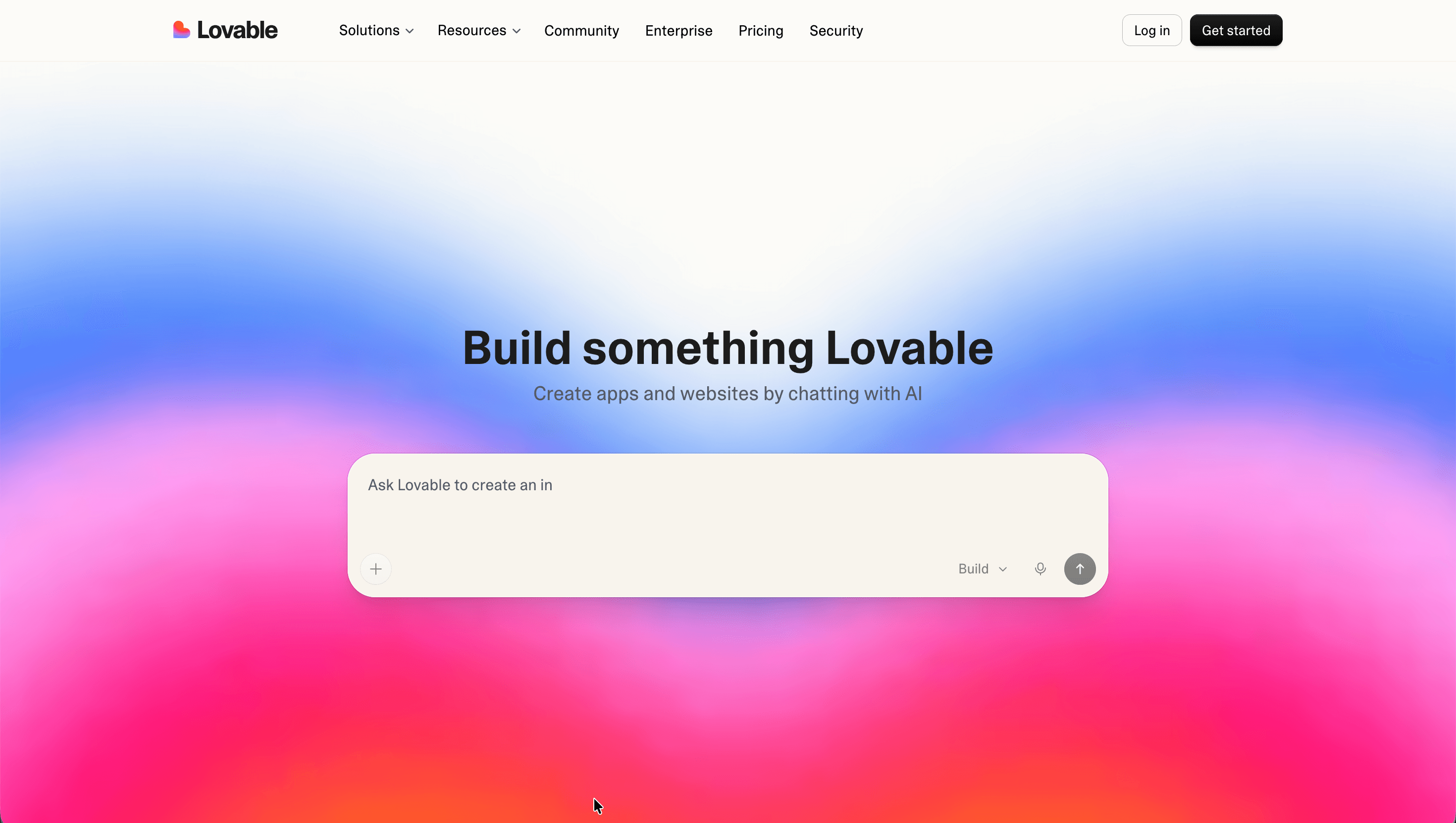
Lovable is an AI-powered platform that turns natural-language prompts into full-stack web applications, generating the frontend, backend, database, authentication, and integrations from a plain description of what you want to build. It belongs to the "vibe coding" category, where software is created by describing it in conversation rather than writing code line by line. You type or speak what you want, the AI builds a working version, and you refine it through chat until it does what you need.
The platform is aimed at a wide audience. Founders and entrepreneurs use it to validate ideas and launch MVPs, designers and product managers use it to prototype without waiting on engineering, and developers use it to skip boilerplate and move faster on the first version of a product. It suits non-coders who want to ship something real, but it also keeps full code access for those who want it. The output covers SaaS products, internal dashboards, marketplaces, landing pages, community platforms, and simple web-based tools.
What distinguishes Lovable in this Lovable review is the combination of design quality and genuine full-stack output. Apps tend to look professionally designed from the first generation, and they come with real authentication, a database, and hosting rather than a static mockup. Code is always owned by the user and can be exported to GitHub and deployed elsewhere, which reduces the lock-in concern common to no-code tools.
| Key data | Detail |
|---|---|
| Website | Lovable.dev |
| Developer | Lovable (Lovable Labs AB), Stockholm, Sweden |
| Launched | Public product launched November 2024 |
| Supported platforms | Web, iOS, Android |
| Free plan / trial | Free plan, no credit card required |
| Main purpose | Build full-stack web apps and websites from AI prompts |
The range of what people build is broad, which the platform organizes into clear use-case categories rather than leaving it abstract.
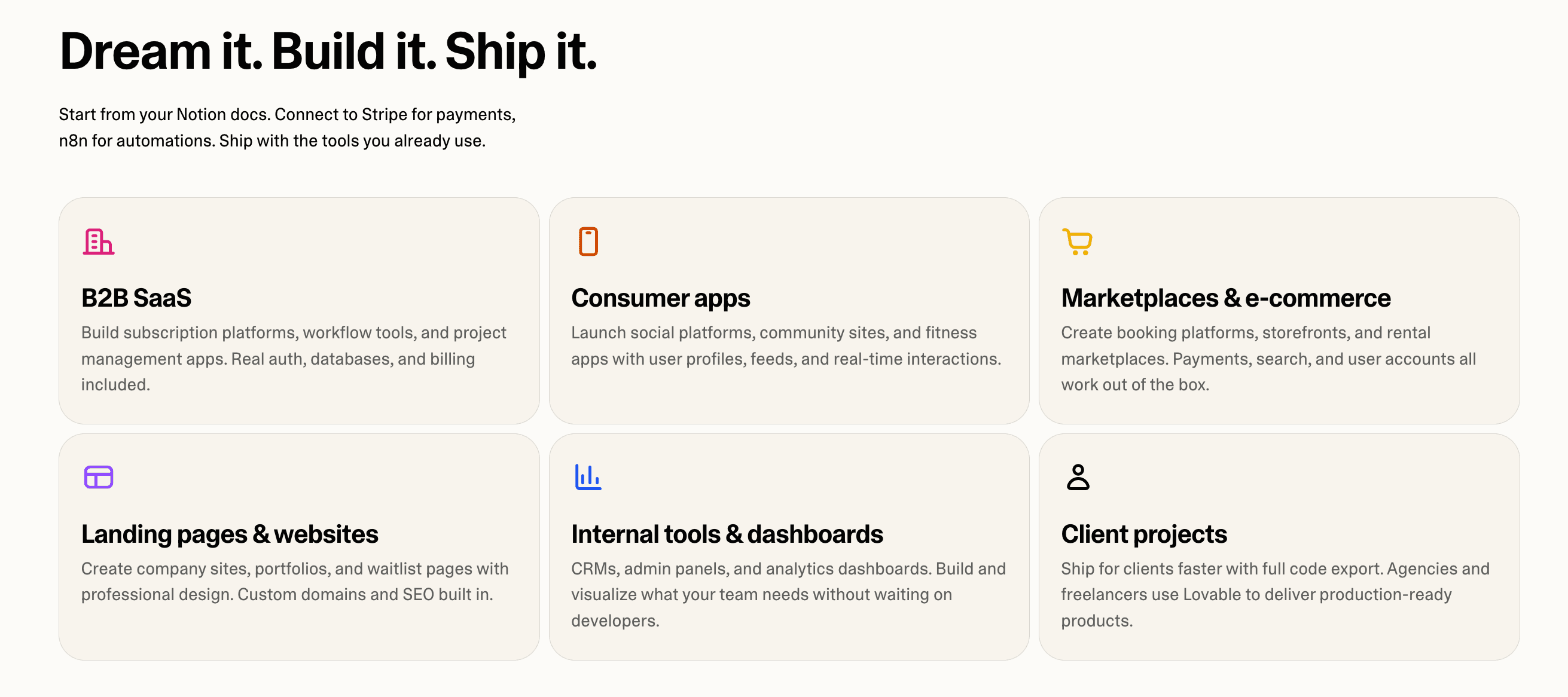
These categories map to real outputs: subscription platforms with working auth and billing, social and community apps with user profiles and feeds, storefronts and booking marketplaces with payments built in, company sites and portfolios with custom domains, internal CRMs and admin panels, and client deliverables that agencies ship with full code export.
Is Lovable Safe and Legitimate?
Lovable is a well-established company rather than a fly-by-night tool. It was founded in 2023 by Anton Osika and Fabian Hedin in Stockholm, growing out of an open-source project called GPT Engineer before launching as a commercial product. The company crossed $100 million in annual recurring revenue within eight months of launch, and by late 2025 it had raised a $330 million Series B round led by CapitalG and Menlo Ventures at a $6.6 billion valuation, with investors including Accel, Khosla Ventures, and Salesforce Ventures. That financial backing and scale are useful signals when judging whether the platform is likely to be around for the long term.
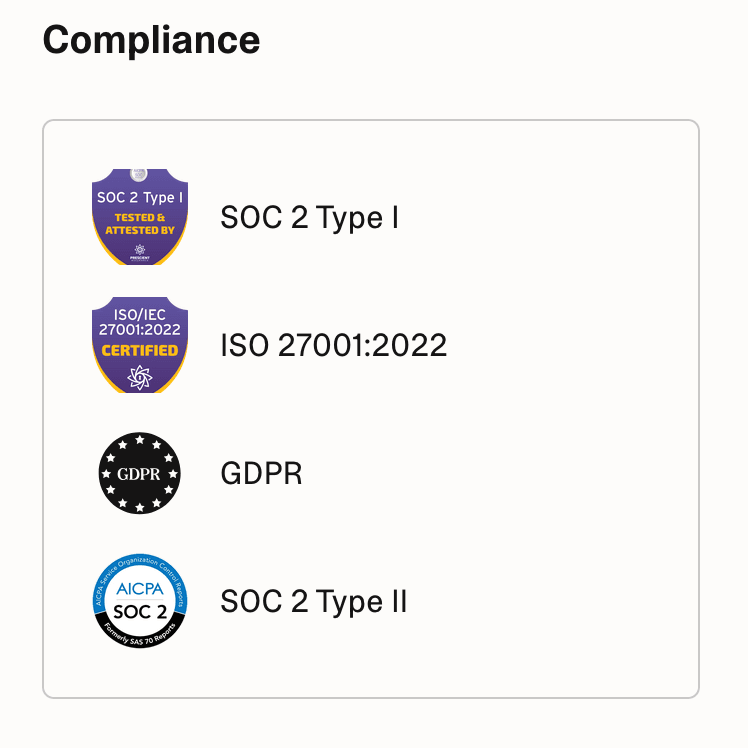
On the compliance side, Lovable holds recognized certifications. It is ISO 27001:2022 certified and SOC 2 Type II compliant, with controls aligned to the SOC 2 Trust Services Criteria, and it supports GDPR with a Data Processing Agreement available. A publicly accessible Trust Center sits at trust.lovable.dev, and the full SOC 2 report is available under NDA through an account manager.
Data handling is spelled out in the privacy documentation. Customer data is hosted in region-specific locations including the EU, US, and Australia, and does not move across regions by default. Customer prompts, code, and workspace data are not used to train Lovable's models, and where third-party AI providers are involved, contracts restrict training and retention. Data sits in SOC 2- and ISO 27001-certified data centers with physical safeguards, staff pass background checks, and the company commits to notifying affected customers within 72 hours of confirming a notifiable breach. For data deletion, personal data is removed within 30 days of account termination, with backups retained up to 90 days.
| Security parameter | Detail |
|---|---|
| Certifications | ISO 27001:2022, SOC 2 Type II, SOC 2 Type I |
| Privacy compliance | GDPR, CCPA/CPRA; DPA available |
| Data residency | EU, US, Australia; no cross-region movement by default |
| Model training on user data | Not used to train Lovable models |
| Breach notification | Within 72 hours of confirmation |
| Built-in app protection | Automated security scanner, RLS analysis, dependency checks |
| AI Act classification | EU AI Act "Low Risk" |
One important nuance for safety concerns both the platform and the apps you build with it. In early 2025, security researchers found that some apps built on Lovable had misconfigured database access controls, exposing data publicly. Lovable responded by adding automatic security scanning, and today a basic scan runs before every publish, with deeper AI-powered scans available on demand and continuous dependency checks in the background. The platform's certifications cover its own infrastructure; the security of an individual app still depends partly on how its database access rules are set up, so apps handling sensitive data benefit from an independent review before launch. User reputation reflects this duality. On Trustpilot and G2, many builders praise the speed and ease, while critical reviews tend to focus on credit consumption during heavy debugging and occasional AI errors on complex logic.
Core Features and Capabilities
The center of the product is prompt-based generation. You describe an application in plain English, and Lovable produces a working version with screens, structure, and logic, then lets you iterate by chatting. Requests like "add a checkout button and process payments with Stripe" or "add a user feedback form and save responses to the database" translate into generated UI plus the backend wiring to support them.
Beyond generation, the meaningful capabilities include a built-in backend through Lovable Cloud, which provides a database, user authentication, file storage, and serverless functions with no manual setup. Apps are built on a modern stack of React, Supabase, and Tailwind, which any developer can pick up. A version history with undo lets you experiment and roll back, and a "Code Mode" on paid plans lets advanced users view and edit the underlying source directly. Generated apps are responsive by default, adapting to phones and tablets in the browser.
For security and quality, four automated scanners cover the core vulnerability categories: row-level security analysis of database access policies, a database security check that reviews schema and RLS together, dependency checks, and a conversational security review you can request from the AI agent at any time. Teams can also commission an independent third-party penetration test through an integrated vendor, producing an audit-ready report.
A useful detail for budgeting is the cost transparency built into the interface. Each message shows its credit cost when you hover over the message options, and monthly usage is visible from the account dashboard, so you can see where credits go rather than guessing.
Lovable Pricing and Plans
Lovable uses a credit-based model rather than per-seat pricing, and a credit is consumed each time you send a message to the AI. Consumption is not uniform: a small styling change costs a fraction of a credit, while a complex multi-component feature costs more. Paid plans are shared across unlimited users in a workspace, which makes the per-seat math favorable for teams. The figures below reflect the standard public tiers, with annual billing saving roughly 16–17%.
| Plan | Price (monthly) | Included credits | Best for | Key inclusions |
|---|---|---|---|---|
| Free | €0 | 5 build credits/day, capped at 30/month | Exploring and learning | Workspace-private projects, unlimited collaborators, 5 lovable.app domains, Cloud, plus 20 Cloud credits/month and a few AI-feature credits |
| Pro | €25 (from $21/mo annual) | 100/month (adjustable upward) | Solo builders and small teams shipping real apps | Everything in Free, plus credit rollovers, on-demand top-ups, unlimited lovable.app domains, custom domains, user roles, remove Lovable badge |
| Business | €50 | 100/month base (adjustable) | Growing teams needing governance | Everything in Pro, plus team workspace, role-based access, SSO, security center, internal publish, personal projects, design templates, data-training opt-out |
| Enterprise | Custom platform fee | Volume-based | Large organizations | Everything in Business, plus volume credit pricing, dedicated support, onboarding, SCIM, audit logs, custom connector support, publishing and sharing controls |
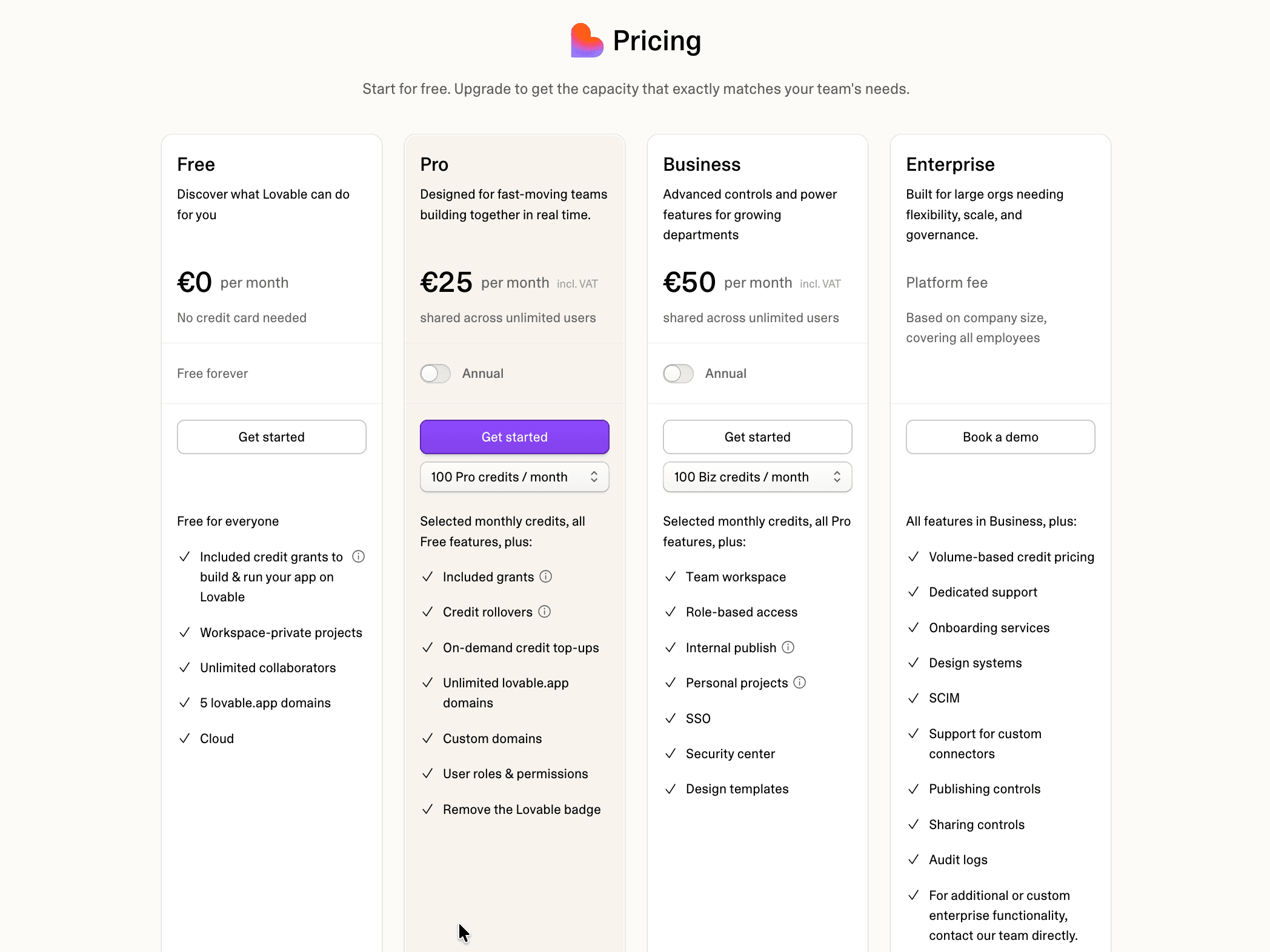
Several details matter for real costs. The credit allowance on Pro and Business is adjustable, so the monthly price scales with the number of credits you select, with a slight per-credit discount at higher volumes; Business runs roughly double the Pro price for the same credit count, with the premium going toward enterprise features like SSO and data opt-out. Unused monthly credits roll over for one additional month on monthly plans, or until the end of the term on annual plans, while the daily build credits do not roll over and reset each day. Top-up credits purchased separately last twelve months. Students and teachers can verify their status for up to 50% off Pro.
There is a separate cost dimension worth understanding. Hosting and AI runtime usage are billed from your credit balance rather than as fixed line items. For small apps, included grants typically cover hosting entirely, but apps with significant traffic or size can begin drawing on the balance. A widely reported pattern is that the all-in cost of shipping a polished product runs higher than the headline plan price once iteration and runtime are included, particularly when prompts are vague and require many rounds of back-and-forth.
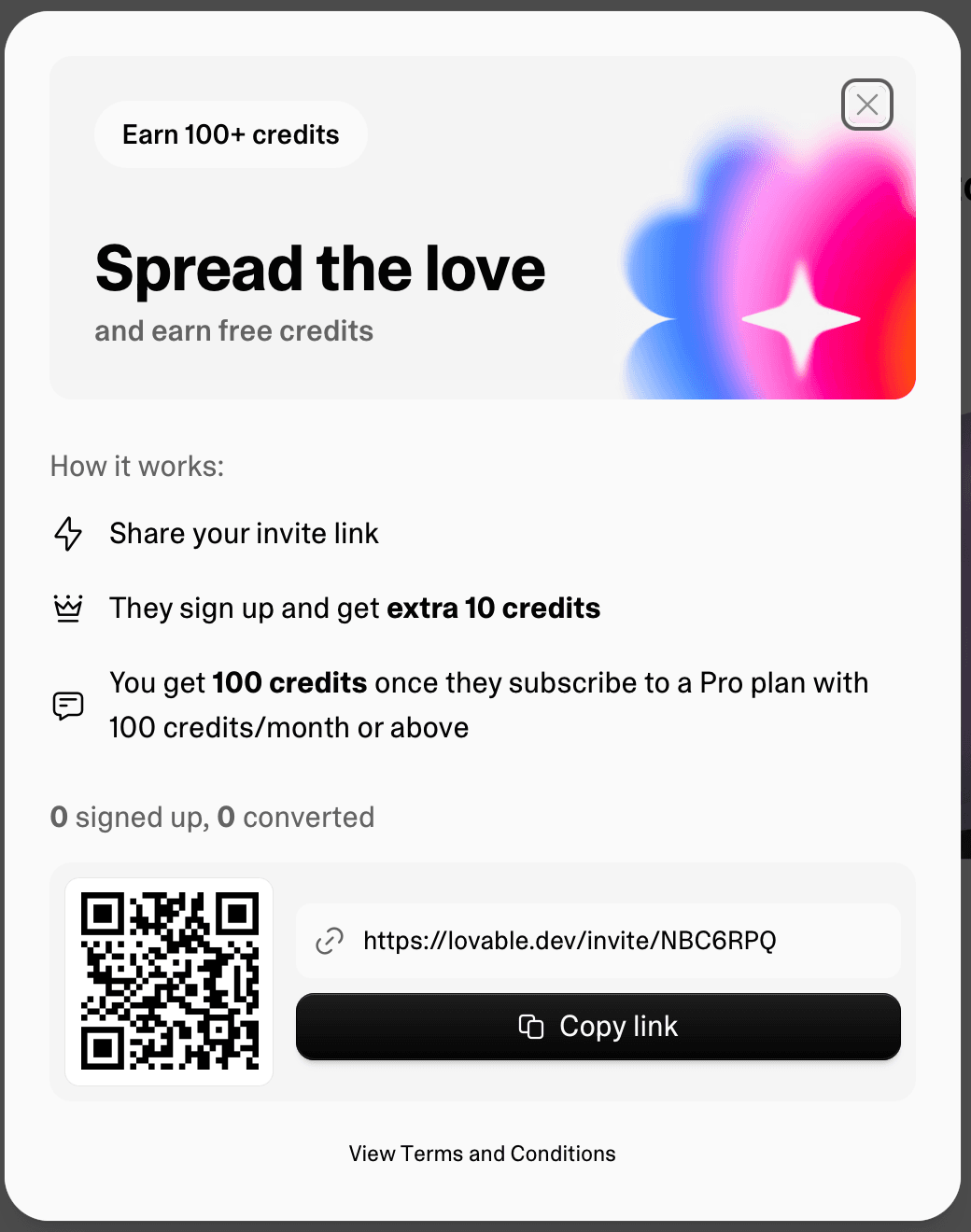
A practical referral element also exists: sharing an invite link grants the new user extra credits on signup, and the referrer earns credits once that person subscribes to a qualifying Pro plan.
Integrations and Compatibility
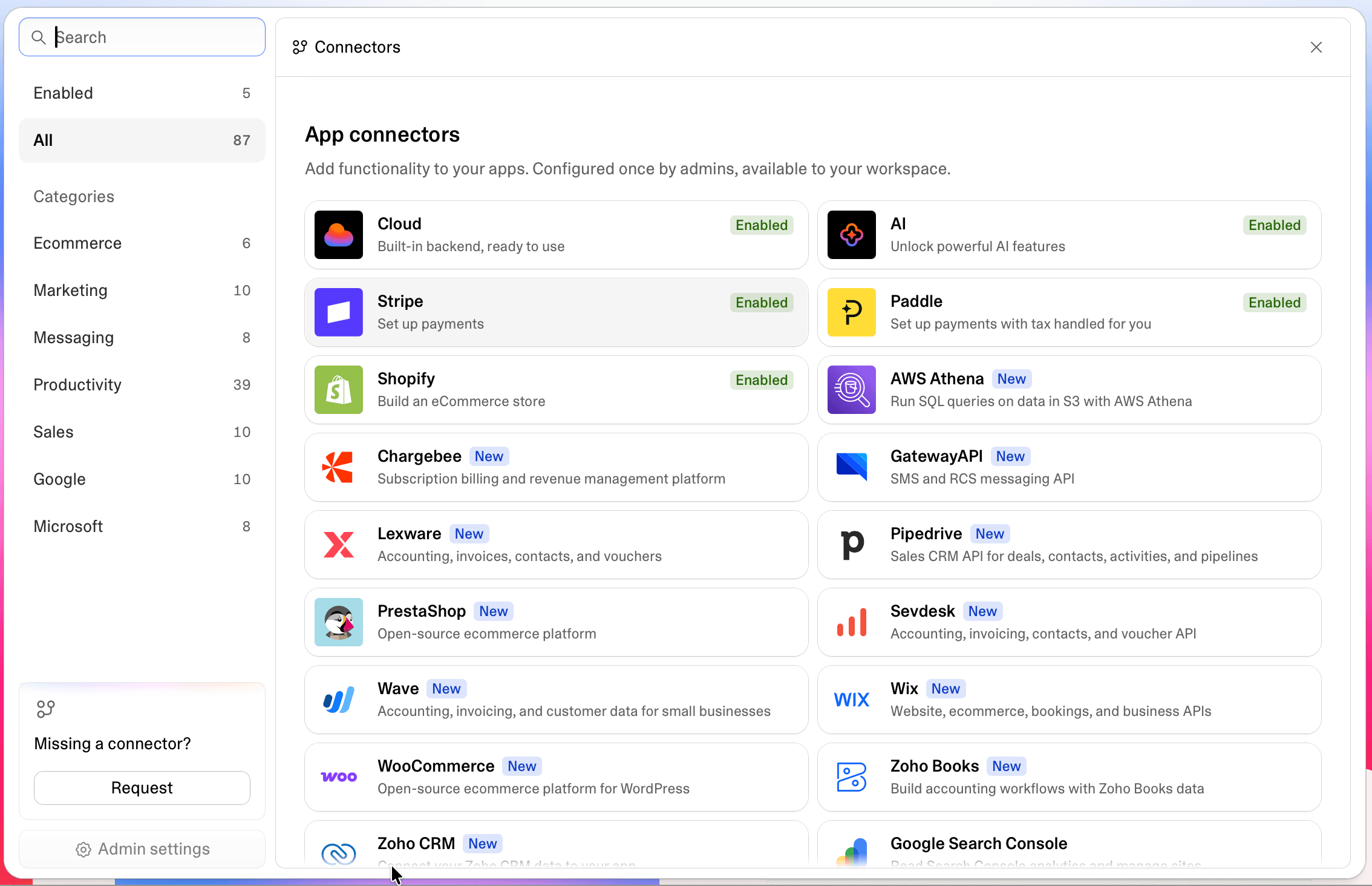
Integration is one of Lovable's stronger areas, and it works across two distinct surfaces. App connectors are workspace-level integrations that a deployed app calls at runtime for things like payments, email, storage, and CRM data. Chat connectors are MCP (Model Context Protocol) servers attached to your build session, giving the AI live context from your existing tools while it builds, without shipping inside the final app.
The native connector library is extensive, covering more than 50 services across databases, payments, analytics, email, content, and productivity, with new ones added regularly. The backend foundation is a close Supabase integration that provides PostgreSQL, authentication, file storage, real-time data, and edge functions, all manageable through the chat interface. Payments run through Stripe and Paddle, e-commerce through Shopify and others, and the platform connects to context tools like Linear, Notion, n8n, Slack, and Google Workspace.
For anything not covered natively, Lovable can integrate with any external API, public or private, authenticated or not, choosing the right approach automatically and storing secret keys securely rather than exposing them in the frontend. Custom MCP servers can be connected for internal or third-party systems. On Business and Enterprise plans, workspace admins can centrally control which chat connectors are available. A practical note for mobile users: OAuth-based connectors such as Slack, GitHub, Google Drive, and Airtable need to be set up on the web app first, after which they work everywhere.
The other half of compatibility is code portability. Projects sync to GitHub with two-way updates, so edits in Lovable appear in the repository and pushes to the connected branch sync back. From there, apps can be cloned into VS Code or Cursor, deployed to Vercel, Netlify, or Cloudflare Pages, and managed with standard Git workflows. The community workflow that has emerged is to prototype the first 70–80% in Lovable, then export and finish in a traditional editor for complex work.
Platforms and Apps
Lovable started as a web platform and remains fullest there, but it now runs as a native app on iOS and Android as well, launched in April 2026. The mobile app shares the same account, projects, and credits as the web version, so you can start a project on a laptop and continue from a phone without losing your place. It supports voice and photo input, lets the AI agent keep working in the background after you submit a prompt, and sends push notifications when a build is ready to review.
There are deliberate differences between versions. The mobile app is designed to complement desktop rather than replace it, so heavy editing, detailed code review, the preview toolbar, and inline comments remain better on a larger screen. Billing also differs by platform: on iOS, upgrades and top-ups go through Apple's in-app purchases, while on Android in-app purchases aren't available yet, so you top up through lovable.dev in a mobile browser with purchases syncing back automatically.
One point of clarity worth stating plainly: the apps Lovable builds are responsive web applications that run in a browser, not native iOS or Android apps published to the App Store or Google Play. The mobile app is a tool for building; the things you build with it are web apps. To package a Lovable app as a true native app, you would wrap it with a separate tool such as Capacitor. The supported requirements for the builder app itself include Android 9 or later on the Android side.
How to Get Started With Lovable
Creating an account and launching a first project is quick, and the Lovable sign up flow offers several routes. The steps below cover going from no account to a working app.
- Go to lovable.dev and choose "Get started," or open the mobile app.
- Create your account using Google, GitHub, or Apple, or enter an email address and continue. SSO is available on Business and Enterprise plans.
- Accept the Terms of Service and Privacy Policy to finish creating the free account.
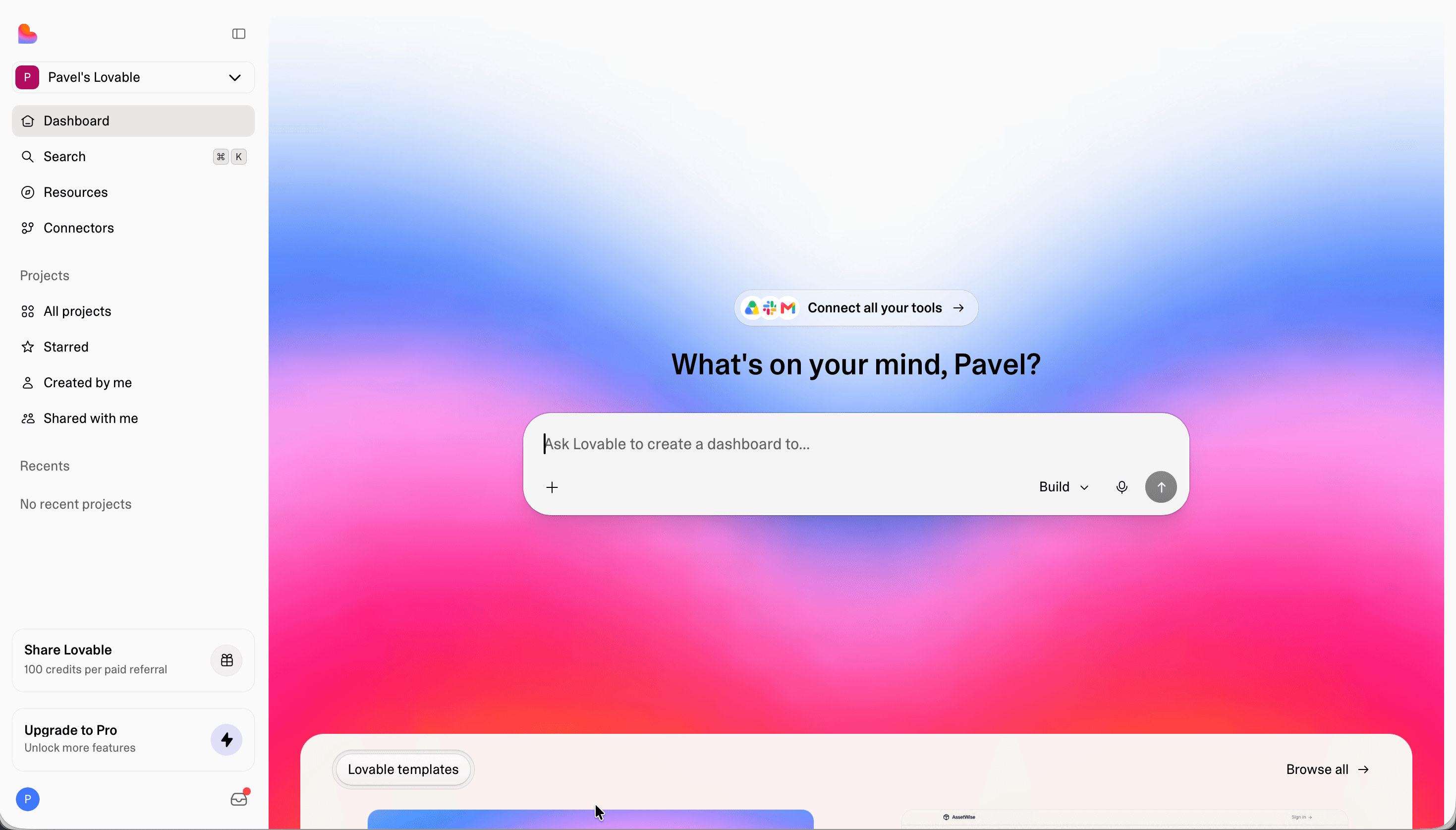
- On the dashboard, type a description of what you want to build into the prompt box, for example a project management app with login, task tracking, and a progress dashboard.
- Let Lovable generate the working app, including UI, code, and infrastructure, then review the live preview.
- Iterate by chatting, refining features, connecting services like Stripe or Supabase, and adjusting the design.
- When ready, deploy with one click to get a shareable URL, and optionally connect GitHub to sync and own the code.
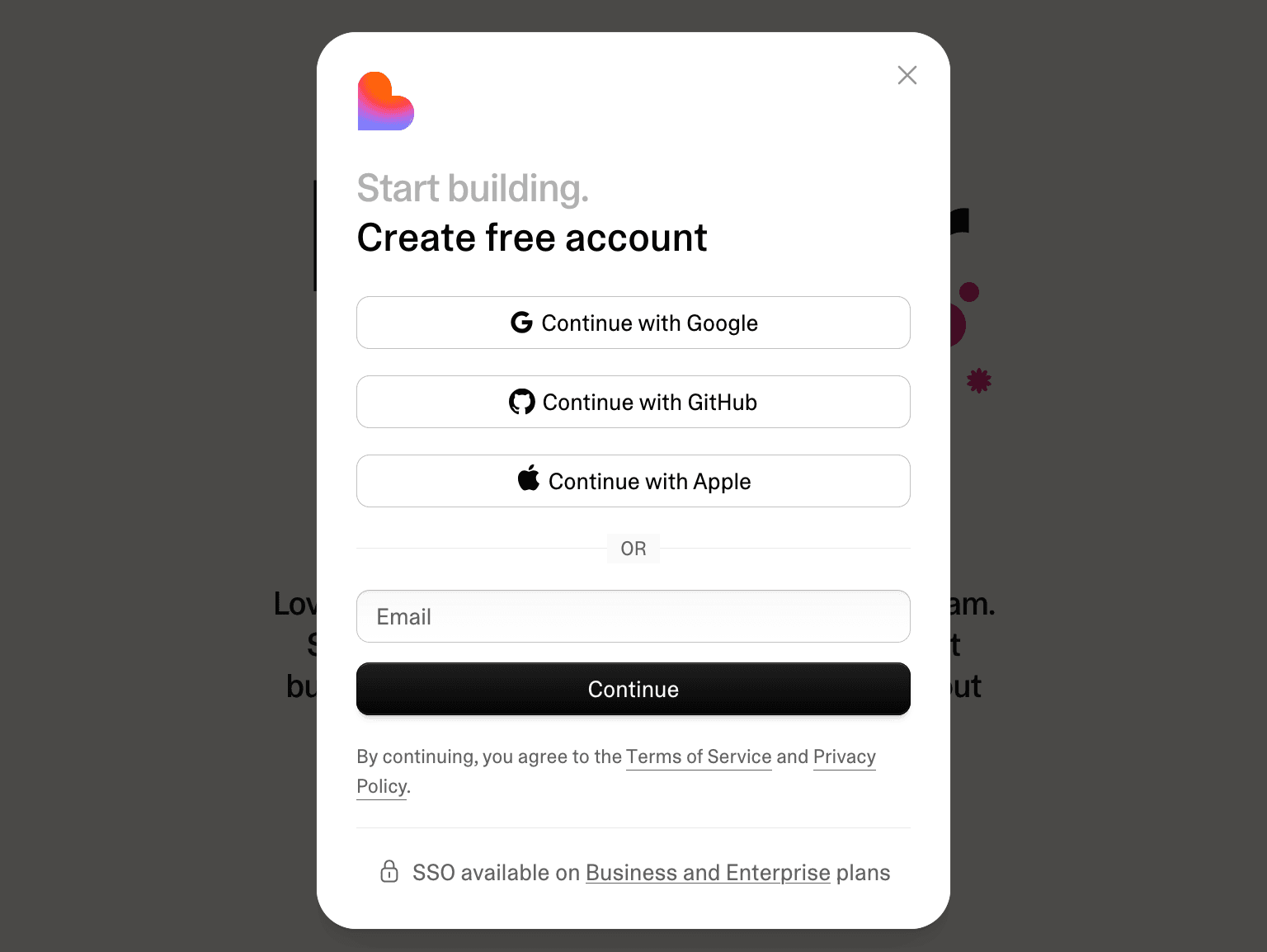
No configuration is required to begin, since authentication, database, and hosting are built in from the start, and no credit card is needed for the free plan. A practical tip that recurs across user experience is that clear, detailed prompts produce better results and waste fewer credits than vague ones, since unclear requests lead to more back-and-forth iterations.
Support and Contact
Support availability depends on whether you're a paying customer. Official support, covering billing, account issues, and platform bugs, is provided through a support form and is guaranteed for paying workspaces; community support through Discord is open to everyone, free and paid. When you submit a request, you first receive an AI response, and if that doesn't resolve the issue you can request routing to a human agent.
| Channel | What it covers | Notes |
|---|---|---|
| Support form | Billing, account, platform bugs | Official support for paying customers; AI response first, then optional human agent |
| Email (support@lovable.dev) | General support inquiries | Backup if the form is unavailable; from your account email |
| Discord community | Workflow help, prompting, bug reports | Open to all users, free and paid |
| Documentation & FAQ | Self-service guides and tutorials | docs.lovable.dev, covering setup, integrations, and how-tos |
| Trust Center | Security and compliance questions | trust.lovable.dev, with AI-indexed answers on request |
| Careers (careers@lovable.dev) | Job applications | Separate from product support |
There is no phone support, which is typical for a product of this kind. For privacy and data-specific matters, dedicated contacts exist at privacy@lovable.dev and a Data Protection Officer at dpo@lovable.dev. Enterprise customers receive a higher tier of support, including priority SLAs with guaranteed response times, white-glove onboarding, and a direct line to the product team.
Lovable Pros and Cons
Pros
- +Builds full-stack web apps from simple text prompts.
- +Goes from idea to working MVP in just a few hours.
- +Uses a modern stack with React, Supabase, and GitHub.
- +Generates clean, editable code you fully own.
- +Ideal for non-coders, founders, and rapid prototyping.
Cons
- –Not reliable enough for sensitive apps.
- –Migrating to a production stack is hard.
Frequently Asked Questions
What is Lovable used for?
It builds full-stack web applications and websites from natural-language prompts. People use it for SaaS products, internal tools and dashboards, marketplaces, landing pages, and prototypes, generating the frontend, backend, database, and authentication together.
Is Lovable free to use?
Yes, there's a free plan with no credit card required. It includes 5 build credits per day capped at 30 per month, private projects, unlimited collaborators, and 5 lovable.app domains, which is enough to explore and publish small projects.
How much does the Pro plan cost?
Pro starts at €25 per month (around $21 with annual billing) for 100 monthly credits, and the credit allowance is adjustable upward, which raises the price accordingly. Students and teachers can get up to 50% off after verification.
Do you own the code Lovable generates?
Yes. Code is always owned by the user and can be exported to GitHub with two-way sync, then deployed anywhere, including Vercel, Netlify, or Cloudflare Pages. This keeps lock-in low compared with many no-code tools.
Can the platform build native mobile apps?
The apps it generates are responsive web applications that run in a browser, not native apps published to the App Store or Google Play. The Lovable mobile app on iOS and Android is for building; turning a built app into a true native one requires a separate wrapper tool.
How does the credit system work?
A credit is consumed each time you send a message to the AI, and complex requests cost more than small edits. Monthly credits roll over for one extra month, daily credits reset each day, and you can see each message's cost in the chat history.
Is it secure enough for real products?
The platform is ISO 27001:2022 certified and SOC 2 Type II compliant, supports GDPR, and runs automated security scans before publishing. The security of an individual app still depends partly on its database access configuration, so apps handling sensitive data should get an independent review before launch.
What backend does it use?
Apps are built on React, Supabase, and Tailwind. Lovable Cloud provides a built-in database, authentication, file storage, and serverless functions, and the Supabase integration gives you PostgreSQL with real-time capabilities, all manageable through chat.